1 view
PART 7 – FIFTY-FIVE YEARS LATER
Winter came.
The mornings got colder.
I kept working at the gas station because the bills didn’t care how old a person was.
My manager still complained about the schedule.
He still said we were short on Tuesdays.
But one morning, Rebecca came in while I was working.
She bought a cup of coffee and stood at the counter.
My manager looked at her.
“Can I help you?”
She smiled.
“Yes. I’m here to pick up my mother.”
He looked at me.
I laughed.
“Well, I’ll be.”
Rebecca turned to him.
“She’s coming to lunch with me.”
He shrugged.
“Take her. Just make sure she’s back tomorrow.”
I pointed a finger at him.
“Don’t you worry. I know where the register is.”
Rebecca laughed.
We went to a little diner down the road.
She ordered pancakes.
I ordered eggs.
We talked about ordinary things.
The weather.
The grandchildren.
Her son’s new job.
The price of groceries.
At one point, she reached across the table.
“Can I ask you something?”
“Of course.”
“Do you ever wish you had done something differently?”
I considered the question.
“About what?”
“About all those years.”
I looked out the window.
A truck was pulling into the parking lot.
A young mother was getting a little girl out of the back seat.
The child was wearing a pink coat.
I watched the mother zip it up.
Then I looked at Rebecca.
“Of course I do.”
She lowered her eyes.
“I wish I’d demanded to see you.”
“I was a baby, Mama.”
“I know.”
“I wish I’d asked more questions.”
“I know.”
“I wish I’d gone looking.”
Rebecca squeezed my hand.
“But you didn’t know.”
I nodded.
“No, honey. I didn’t.”
She took a breath.
“Do you regret not finding me?”
I looked at her for a long moment.
Then I said something I had been thinking about for weeks.
“I regret what was taken from us.”
She nodded.
“But I don’t regret the love I gave you, even from far away.”
Rebecca began crying.
I reached over and wiped her cheek.
“And I don’t want you spending your life trying to make up for something you didn’t do.”
She shook her head.
“I just want time with you.”
I smiled.
“Then let’s have some.”
We finished our breakfast.
On the way home, we stopped at H-E-B.
Rebecca picked out flowers.
Yellow ones.
The kind I’d bought every September.
She paid for them before I could reach into my purse.
“Those are mine,” I told her.
“I know.”
“Then let me pay.”
“No.”
I looked at her.
She smiled.
“Let your daughter buy you flowers for once.”
I laughed.
And I let her.
PART 8 – THE LETTER I WROTE TO MY DAUGHTER
That night, I sat at my kitchen table.
The house was quiet.
I took out a sheet of paper.
I hadn’t written a letter in years.
My hands were a little stiff, and my handwriting wasn’t what it used to be.
But I wanted Rebecca to have something.
Something she could keep.
Something she could read when I wasn’t around.
I began.
My sweet Rebecca,
I have spent most of my life believing you died.
I was seventeen when you were born. I was frightened, but I loved you before I ever saw your face.
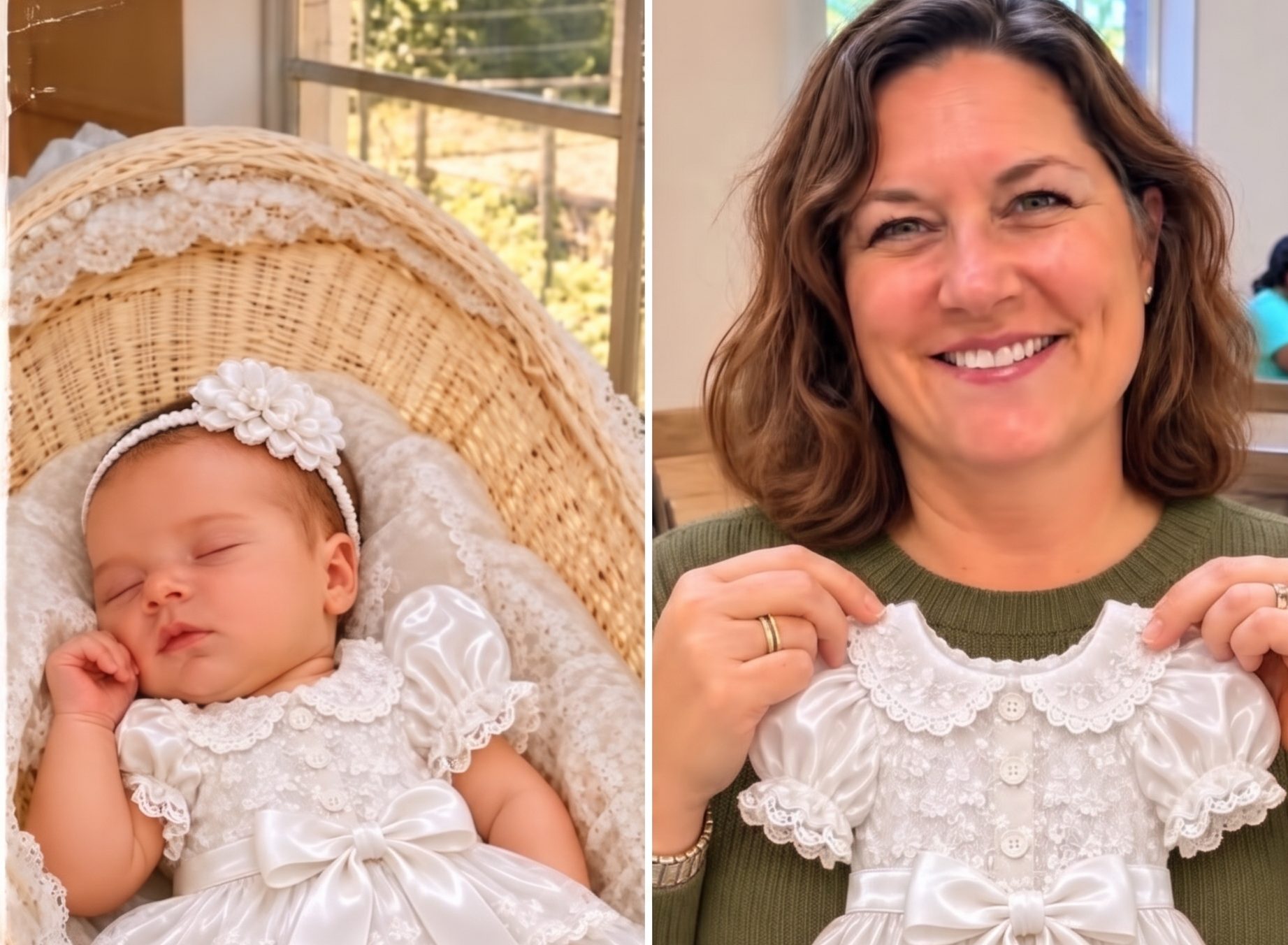
I loved you when I held the little gown your grandmother made.
I loved you when I woke up in that hospital bed and was told you were gone.
I loved you every September when I bought flowers.
I loved you when I stood beside that little stone and talked to you.
I loved you when I imagined what kind of woman you might become.
I loved you when I had nothing but memories of a child I never got to hold.
And now that I know you are alive, I love you in a different way.
I love your laugh.
I love the way you wrinkle your nose when you’re thinking.
I love how you put too much sugar in your coffee.
I love that you bring groceries even when I tell you not to.
I love your children.
I love your husband.
I love the family you made while I was waiting.
I cannot give you back the years.
I cannot be there for your first steps or your first day of school.
I cannot take you to your first dance or hold your hand when you had your first broken heart.
But I can be here now.
And if the Lord gives me another morning, I will be here for that one too.
I don’t know how many birthdays we have left together.
But I know what I want to do with them.
I want to eat cake.
I want to hear your stories.
I want to know my grandchildren.
I want to see where you live.
I want to learn how you like your coffee.
I want to be called Mama by a woman who has already lived a whole lifetime.
And I want you to know that you never had to earn your place in my heart.
You were there from the beginning.
Love,
I folded the letter and put it in an envelope.
The next Sunday, I gave it to her.
She read it sitting at my kitchen table.
When she finished, she held it against her chest.
Then she came around the table and hugged me.
“Thank you, Mama.”
I held her for a long time.
And I thought about the little girl in the hospital photograph.
The little girl with the dark hair.
The little girl who had been carried out of the hospital in somebody else’s arms.
I thought about all the years.
And for the first time, I didn’t feel like I was standing at a grave.
I felt like I was standing at the beginning of something.
PART 9 – THE LAST BIRTHDAY
My seventy-third birthday came the following September.
Rebecca insisted on having a party.
I told her I didn’t want a fuss.
She told me it wasn’t my decision.
So I gave up.
She invited the whole family.
Grace brought a chocolate cake.
Daniel brought flowers.
The grandchildren made a card that was so big it barely fit through my front door.
There were balloons.
There was music.
There was too much food.
And there was a little girl named Emma, my youngest granddaughter, who sat beside me and asked questions all afternoon.
“Grandma Doll?”
“Yes, sweetheart?”
“Did you know my mommy when she was a baby?”
I smiled.
“No, honey. I didn’t get to.”
“Why?”
I looked at Rebecca.
She came over and sat beside us.
“Because sometimes grown-ups make mistakes.”
Emma thought about that.
Then she looked at me.
“But you know Mommy now.”
I nodded.
“Yes, I do.”
She smiled.
“That’s good.”
Then she gave me a little drawing.
It showed two women holding hands under a yellow sun.
One was tall.
One was short.
There was a little heart between them.
At the bottom, she’d written:
MY GRANDMA’S MOM.
I laughed so hard I had to wipe my eyes.
Rebecca put her arm around me.
Later that evening, after everybody had gone home, she helped me clean the kitchen.
She found the old birthday trunk in the hallway.
“Do you still keep all the letters?” she asked.
“Every one.”
She picked up the little red sweater.
“I remember you told me about this.”
I nodded.
“I bought it when you were three.”
She held it against herself.
“I wish I could have worn it.”
I smiled.
“It would’ve been a little big.”
She laughed.
Then she became quiet.
“Can I ask you something, Mama?”
“Anything.”
“When you used to visit the stone, did you ever talk to me?”
I nodded.
“Every year.”
“What did you say?”
I thought for a moment.
“Different things.”
“Like what?”
I smiled.
“Sometimes I told you about your father. Sometimes I told you about the weather. Sometimes I complained about the price of groceries.”
Rebecca laughed.
“And sometimes?”
I looked at her.
“Sometimes I told you I was sorry.”
She lowered her eyes.
I took her hand.
“I don’t say that anymore.”
She looked up.
“Why not?”
“Because I know where you are now.”
She smiled.
Then she kissed my cheek.
“Goodnight, Mama.”
“Goodnight, baby.”
She stopped at the door.
“One more thing.”
“What is it?”
“Next September, I want to buy the flowers.”
I nodded.
“All right.”
She smiled.
“Yellow ones.”
I smiled back.
“Yellow ones.”
PART 10 – THE STONE HAS A NAME
The next September, Rebecca and I returned to the memorial garden.
The crepe myrtle was blooming.
The little stone sat beneath it.
There were no longer flowers on the ground from the previous year.
The church caretaker had cleaned the garden.
Rebecca carried a bouquet of yellow roses.
I carried a small photograph.
It was the picture of Mama holding Rebecca in the hospital.
We stood together.
Rebecca placed the roses beside the stone.
Then she looked at the name.
She touched the letters.
“Do you think Grandmother knew we’d come here together one day?”
I looked at the photograph.
“I think she hoped we would.”
Rebecca nodded.
I placed the photograph against the stone.
Then I spoke.
“Hello, baby.”
Rebecca laughed softly.
“Mama, I’m standing right here.”
I smiled.
“I know, sweetheart.”
I looked down at the flowers.
“For fifty-five years, I came here believing I was saying goodbye.”
Rebecca took my hand.
“And now?”
I looked at her.
“Now I’m saying thank you.”
She leaned her head against my shoulder.
We stood there for a while.
Then she asked me something.
“Do you forgive her?”
I knew who she meant.
I looked toward the church.
I thought about Mama’s little kitchen.
Her Sunday root beer floats.
Her hands sewing the satin gown.
Her years of silence.
Her fear.
Her love.
Her betrayal.
I took a slow breath.
“I don’t know if forgiveness happens all at once.”
Rebecca nodded.
“But I don’t want to carry anger until the day I die.”
I looked at the little stone.
“Your grandmother made a terrible mistake. And she spent the rest of her life living with it.”
I touched the photograph.
“I wish she’d been brave enough to tell the truth.”
“So do I,” Rebecca whispered.
“But I don’t want her mistake to be the last thing I remember about her.”
Rebecca squeezed my hand.
“What do you want to remember?”
I smiled.
“The woman who made my little girl’s christening gown.”
We stood together under the crepe myrtle.
Then Rebecca put her arm around my waist.
And I put mine around her shoulders.
For the first time, the memorial garden didn’t feel like a place of loss.
It felt like a place where something had finally come home.
EPILOGUE – WHAT I LEARNED AT SEVENTY-THREE
People sometimes ask me whether I wish I’d known the truth sooner.
The answer is yes.
Every day.
I wish I’d known Rebecca when she was a little girl.
I wish I’d packed her school lunches.
I wish I’d watched her learn to ride a bicycle.
I wish I’d sat in the front row at her wedding.
I wish I’d held her babies when they were born.
I wish I’d known that she had my dimple.
That she liked too much sugar in her coffee.
That she laughed with her whole face.
I wish I hadn’t spent fifty-five years talking to a stone.
But life doesn’t give a person the years back.
It gives you the morning you wake up in.
And what you decide to do with it.
Mama is gone now.
My husband is gone.
Aunt Lydia is gone.
The people who knew the whole story are mostly gone.
But Rebecca is here.
She calls me every morning before work.
Sometimes she asks if I’ve eaten.
Sometimes she reminds me to take my medicine.
Sometimes she calls just to tell me something silly her granddaughter said.
And every Sunday, she comes to my house.
We make root beer floats.
I learned how to make them the way Mama did.
Two scoops of vanilla.
Cold root beer.
A little extra foam.
Rebecca says they’re the best she’s ever tasted.
I think she says that because she knows how much it means to me.
Last Sunday, she brought the christening gown.
She had it cleaned and carefully preserved.
She asked if we could put it in a glass case.
I told her that was a good idea.
Then she asked whether she could have it someday.
I looked at her.
“Of course, sweetheart. It’s yours.”
She held it carefully.
“I want to give it to Grace when she has a little girl.”
I smiled.
“That would make me happy.”
Then she looked at me and said something I’ll remember for the rest of my life.
“You know, Mama, I used to think I was missing half my story.”
I nodded.
“And now?”
She took my hand.
“Now I know I was just waiting to meet you.”
I couldn’t speak.
I kissed her cheek.
And we sat together in the kitchen while the afternoon sun came through the window.
I’m seventy-three years old.
I’m still short.
I still wear my good black dress to funerals.
I still work mornings at the gas station.
And I still buy yellow flowers every September.
But I don’t buy them alone anymore.
Last year, when Rebecca and I visited the memorial garden, she placed the flowers beside the little stone.
Then she turned to me.
“Ready to go home, Mama?”
I looked at the stone one last time.
For fifty-five years, I’d believed my daughter was beneath it.
Now I knew she was standing beside me.
I took her arm.
“Yes, baby.”
And we walked back toward the church together.
Because sometimes the greatest miracle isn’t getting back the years you lost.
Sometimes it’s being given one more day to love the people you thought you’d lost forever.
And if there’s one thing I know now, it’s this:
A mother never stops being a mother.
Not at seventeen.
Not at seventy-three.
Not after fifty-five years.
And not even when the whole world tells her the child she carried is gone.
My baby didn’t die that September night in 1971.
She grew up. She became a woman. She became a mother herself.
And one Tuesday morning, at her grandmother’s funeral, she stood up from the back pew, looked me in the eyes, and came home.
Related stories
Emily Carter’s Hospital Room Changed Everything Her Husband Believed
My Daughter Called Me a Leech, But the Next Morning I Walked Into Her Bank With $260 Million
Jenna Turned the Car Around, and Then Thanksgiving Changed Everything
How One Orange Peel in the Mess Hall Brought Down Sergeant Miller
<h1 class="page-title">After my husband shoved me down the stairs, my mother-in-law stood over me and called me “a worthless disgrace.” Then she called my father and said, “Come take your broken daughter. She’s no longer our problem!” My father calmly replied, “Touch her again,</h1>