# The Night My Husband Called Me a Pig
The sommelier lowered his voice, but not enough.
“The system says the card has been deactivated due to unauthorized-user status.”
Greg’s phone began vibrating on the table with automated banking alerts.
His face went red.
Then white.
Around us, thirty people stopped talking.
For the first time all night, nobody was laughing.
I sat quietly at the end of the table.
Greg looked at me.
“What did you do?”
I picked up my water glass.
“Nothing.”
His eyes narrowed.
“Deborah.”
I took a sip.
“You said this was your card.”
“It is.”
“No,” I said calmly. “It isn’t.”
The room became so quiet I could hear the faint clinking of silverware from the dining room next door.
Greg stood.
“Excuse me.”
The sommelier stepped back.
Greg pulled out his phone.
He tried another card.
Declined.
He tried his personal debit card.
Declined.
He stared at the screen.
“What the hell?”
I knew exactly what had happened.
Richard had moved quickly.
The corporate card wasn’t technically Greg’s.
It had always been issued through the company’s primary account.
And the company account was controlled by the person whose name was on the banking authorization.
Mine.
Greg looked at me again.
“You did this?”
I shook my head.
“I made a phone call.”
“To whom?”
“Our attorney.”
His jaw tightened.
“Why?”
I looked around the room.
At the developers.
The vendors.
The employees.
The friends who had just laughed when my husband called me a pig.
“Because I finally listened to what you said about me.”
His face hardened.
“What is that supposed to mean?”
“You told everyone I’m nothing but a glorified office drone.”
I smiled faintly.
“So I decided to stop doing the job.”
Someone at the far end of the table coughed.
Elena suddenly became fascinated with her wine glass.
Greg looked around as if waiting for someone to rescue him.
Nobody did.
The sommelier returned.
“Mr. Whitaker, I’m sorry, but we’ll need payment before we can continue service.”
Greg stared at him.
“Put it on the company account.”
“I can’t.”
“Why not?”
“Because the company account has been restricted.”
The words hit the room like a dropped glass.
One of our developers whispered:
“Restricted?”
I stood.
“Everyone, I’m sorry.”
Greg looked horrified.
“Deborah, sit down.”
I ignored him.
“I don’t want anyone here to feel uncomfortable. Dinner can continue if you’d like. But from this point forward, company expenses will need to be approved through the appropriate channels.”
A man named Robert Chen, one of our oldest commercial clients, looked at me.
“What happened?”
I glanced at Greg.
Then back at Robert.
“An internal authorization issue.”
Greg laughed bitterly.
“Don’t listen to her.”
I looked at him.
“Then tell them.”
He went silent.
Because he couldn’t.
Not without explaining why he’d tried to move $60,000 from company funds into his personal trading account.
Not without explaining why the corporate credit line had been nearly exhausted.
Not without explaining why three vendor accounts were overdue despite having sufficient cash reserves.
Not without explaining why our accountant had found irregular transfers to a consulting company owned by one of Greg’s friends.
And certainly not without explaining why he had spent the last year quietly positioning himself as the sole owner of a company whose financial backbone was in my name.
Richard had discovered all of it.
I had simply been too afraid to act.
Until tonight.
—
The next morning, Greg came home furious.
He slammed the front door so hard the picture frames shook.
“You humiliated me.”
I was sitting at the kitchen table with my laptop open.
“I didn’t say anything.”
“You deactivated my card in front of thirty people!”
“No.”
I closed the laptop.
“The bank did.”
“Because you told them to!”
“I told our attorney to review your authorization.”
“You knew that card was for company expenses!”
“I did.”
“Then how am I supposed to run the business?”
I stared at him.
“You’re not.”
Silence.
“What?”
“I said you’re not running it.”
His face changed.
“You can’t do that.”
“I already did.”
He laughed.
It wasn’t a normal laugh.
It was the laugh of someone who believed the person standing in front of him had finally lost her mind.
“You’re my wife.”
“Yes.”
“This is my company.”
“No.”
He stopped.
“What?”
I reached for the folder beside me.
“You’ve been telling everyone for years that Whitaker Landscape Design is your company.”
I opened the folder.
“Legally, it’s not.”
He stared at the documents.
“The original incorporation papers list me as the controlling shareholder.”
He grabbed the papers.
“No.”
“Yes.”
“I signed those.”
“You signed as operations director.”
His hands began shaking.
“You said it was temporary.”
“It was.”
He looked at me.
“Then why didn’t you change it?”
“Because you never asked.”
He stared at the paperwork.
For nineteen years, he’d never bothered to read it.
That was the problem.
He’d assumed the person doing the paperwork was less important than the person standing in front of cameras.
—
At ten o’clock Monday morning, Richard arrived with two other attorneys.
Greg refused to leave the house.
He paced around the kitchen while they explained the situation.
The emergency operational freeze had been implemented.
Corporate credit cards were suspended pending review.
New contracts required dual authorization.
Bank transfers above a certain threshold required my approval.
Vendor payments were being audited.
And the $60,000 transfer Greg had attempted had been stopped.
Richard placed a folder on the table.
“There is one more issue.”
Greg glared at him.
“What?”
“Your attempted transfer.”
“I told you. It was an investment.”
“Using company funds.”
“I was going to put the money back.”
“Were you?”
Greg looked away.
Richard opened another document.
“We found four previous transfers.”
Greg’s face changed.
“What?”
“Six thousand dollars to a private investment account.”
Another page.
“Eight thousand.”
Another.
“Eleven thousand.”
He turned the page.
“Twenty-one thousand.”
I stared at Greg.
He had never told me about any of them.
Richard looked at me.
“The total is forty-six thousand dollars.”
Greg shook his head.
“Those were reimbursements.”
“For what?”
“Business expenses.”
“Where are the receipts?”
Silence.
Richard closed the folder.
“That is what we will be investigating.”
Greg stood.
“You’re treating me like a criminal.”
I looked at him.
“No.”
I said it quietly.
“I’m treating you like a person who needs to explain where my company’s money went.”
—
That afternoon, something unexpected happened.
Our employees began calling me.
First, Marcus, our site foreman.
Then Linda from purchasing.
Then our bookkeeper.
Then three project managers.
Nobody knew what was happening.
But everyone had noticed the same thing.
Greg had been making promises the company couldn’t afford.
He had approved discounts without authorization.
He had promised clients completion dates without consulting crews.
He had delayed vendor payments while spending thousands on personal expenses.
And he had been telling everyone that I was the reason the company had become “too bureaucratic.”
Linda finally said something that broke my heart.
“Deborah, I always thought you were the reason we survived.”
I closed my eyes.
“Thank you.”
She hesitated.
“Can I be honest?”
“Yes.”
“We were scared you were going to leave.”
I looked at her.
“Why?”
“Because Greg kept saying you were tired and wanted out.”
I almost laughed.
“I wasn’t tired of the company.”
“What were you tired of?”
I thought about it.
“Being invisible.”
—
Three weeks later, the audit was finished.
The numbers were worse than we’d expected.
Greg had misused more than $180,000 in company funds over eighteen months.
Some of it had gone into investments.
Some had paid personal credit cards.
Some had covered luxury purchases.
And some had gone to a woman named Elena.
The same Elena who had laughed at the birthday dinner.
When Richard showed me the records, I felt something inside me go cold.
“Is she involved?”
“We don’t know yet.”
I stared at the transfers.
“What are these?”
“Payments labeled as consulting.”
“How much?”
“Twenty-four thousand.”
I remembered Greg’s arm around her chair.
His jokes.
His confidence.
The way he had looked at me when I’d entered the room.
Suddenly, the birthday dinner wasn’t simply cruel.
It was a performance.
He’d wanted everyone to believe I was irrelevant.
Because if people believed I was irrelevant, they wouldn’t ask why I controlled the money.
They wouldn’t ask why the business survived because of me.
And they certainly wouldn’t ask where the money was going.
—
The divorce papers were filed in March.
Greg reacted exactly as I expected.
He called me vindictive.
Then greedy.
Then unstable.
Then heartless.
When none of that worked, he called me a bad wife.
That one almost made me laugh.
For nineteen years, I’d been the wife who worked late.
The wife who remembered birthdays.
The wife who handled payroll.
The wife who knew which employee needed help.
The wife who paid the mortgage.
The wife who kept the company alive.
And somehow, I was the bad one because I finally stopped.
During mediation, Greg demanded half the company.
Richard slid the original incorporation documents across the table.
“Mr. Whitaker, your wife owns the controlling interest.”
Greg stared at them.
“But I built it.”
I looked at him.
“No.”
His eyes met mine.
“We built it.”
That was the first time he looked genuinely ashamed.
—
The settlement took eight months.
I kept controlling ownership of Whitaker Landscape Design.
Greg received a negotiated buyout based on the value of his legitimate equity.
He lost access to corporate credit.
He lost his company vehicle.
He lost his country club membership because the membership had been paid through company funds.
He also had to repay a significant portion of the money he’d taken.
The company survived.
More importantly, it became healthier.
We hired a professional operations manager.
We implemented dual-signature banking controls.
Every executive expense required documentation.
No more handshake deals.
No more personal spending disguised as business expenses.
No more one person controlling everything.
I also changed something else.
My title.
I stopped calling myself the office manager.
My business card now read:
**Deborah Whitaker
President & Chief Operating Officer**
The first time I saw it printed, I stared at it for almost a minute.
It felt strange.
Not because the title was new.
Because it finally said out loud what had been true for years.
—
Six months after the divorce, I received an invitation.
A developer we’d worked with for years was hosting a charity gala.
I almost didn’t go.
Then I decided I would.
I wore the same emerald dress.
The one I’d worn to Greg’s birthday.
My hair was different.
My posture was different.
But the dress was the same.
When I walked into the ballroom, several people recognized me.
Robert Chen came over first.
“Deborah.”
“Robert.”
He smiled.
“I heard the company is doing very well.”
“It is.”
“I also heard you opened three new commercial divisions.”
“We did.”
He raised his glass.
“To the person who was apparently just an office drone.”
I laughed.
“Don’t remind me.”
He shook his head.
“For what it’s worth, most of us knew better.”
I looked around the room.
“Most?”
He smiled.
“Some people confuse volume with importance.”
I smiled.
“That sounds familiar.”
—
About a year after the divorce, I received one final message from Greg.
It came at 11:43 p.m.
**I made a mistake.**
I stared at the screen.
Another message arrived.
**I didn’t realize how much you did.**
Then:
**I miss you.**
I didn’t respond.
A fourth message appeared.
**Do you ever think about us?**
I finally typed something.
**I think about who I was before I realized I was living for someone else’s approval.**
Then I deleted it.
I didn’t send anything.
Because I realized I no longer needed him to understand.
That was the freedom.
Not revenge.
Not watching him struggle.
Not seeing him embarrassed.
Freedom was waking up and realizing his opinion no longer determined how I saw myself.
—
Two years after that birthday dinner, Whitaker Landscape Design doubled in size.
We expanded into Oregon.
We bought our own equipment yard.
We created a profit-sharing program for employees.
And I started mentoring young women entering the construction and landscape industries.
At our annual company meeting, I stood on a stage in front of more than a hundred employees.
I looked across the room.
People who knew exactly what I did.
People who knew my name.
People who didn’t need me to prove anything.
I thought about that night at Morton’s.
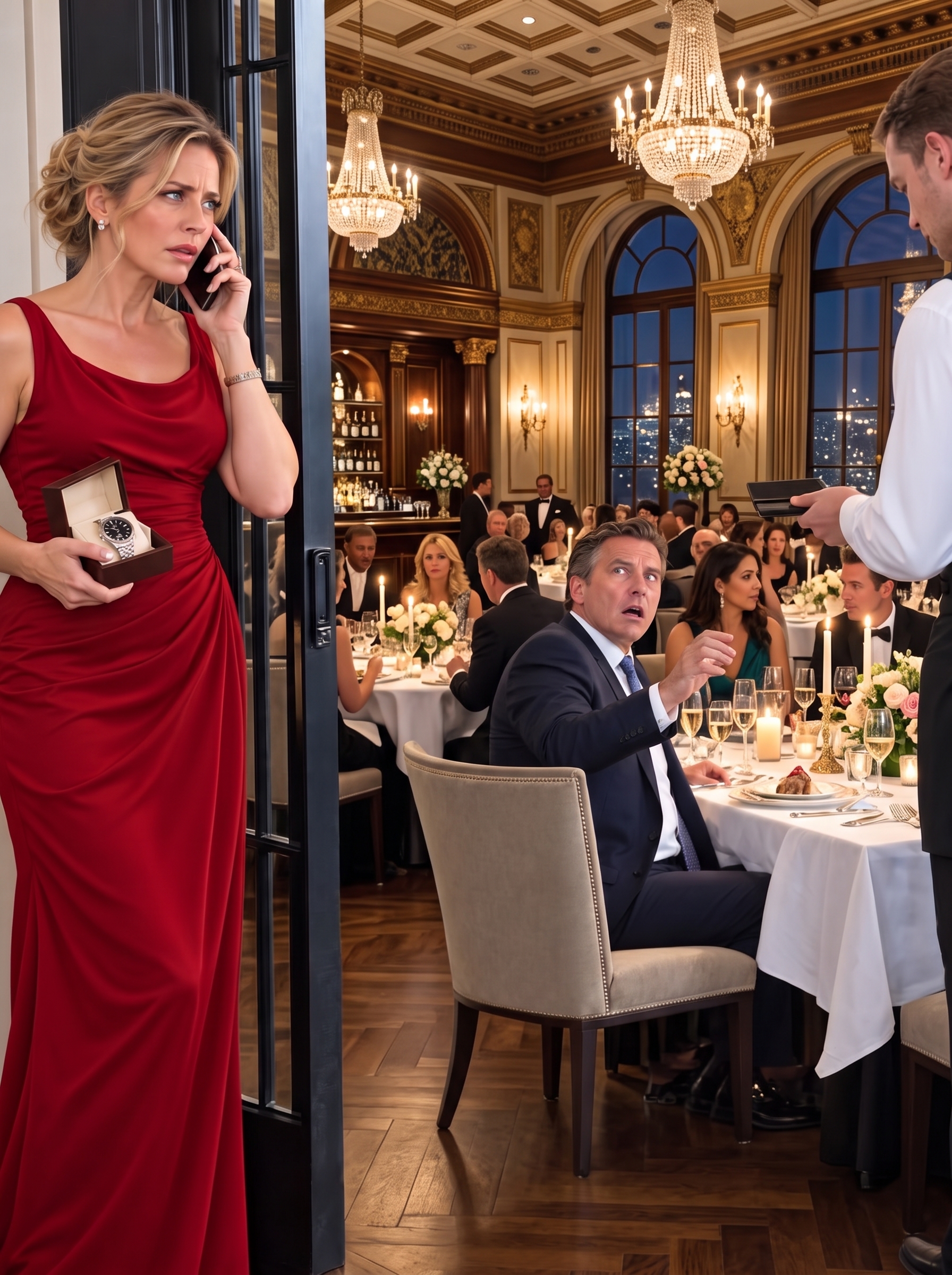
The velvet box.
The $5,000 Omega.
The laughter behind the doors.
The word that had changed everything.
Pig.
I still had the watch.
I never gave it to Greg.
After the divorce, I had considered selling it.
Instead, I kept it.
Not because I wanted a reminder of him.
Because I wanted a reminder of the woman I had been that night.
The woman standing outside that dining room with a gift in her hands, finally realizing that she had spent nineteen years giving things to someone who didn’t understand their value.
At the end of the company meeting, I opened the velvet box.
The Omega caught the light.
I looked at it for a moment.
Then I closed the box.
I didn’t need it anymore.
The next morning, I donated it to a charity auction benefiting women starting small businesses.
It sold for $7,400.
I smiled when I heard.
The watch had finally done what I’d wanted it to do.
It created something valuable.
Just not for Greg.
For someone who would actually appreciate it.
And that, more than anything, was the ending I wanted.
Because the night my husband called me “that pig,” I thought he had humiliated me in front of thirty people.
I was wrong.
He had accidentally given me something far more valuable.
Clarity.
Fifteen minutes after he insulted me, his corporate card stopped working.
Eight months later, our marriage ended.
Two years later, my company doubled.
And three years later, I finally understood the lesson I should have learned much earlier:
**Never confuse being needed with being loved.**
Sometimes the person who keeps everything running is the last person anyone notices.
Until she stops.
And when she does, everyone suddenly discovers exactly how much she was carrying.