131 views
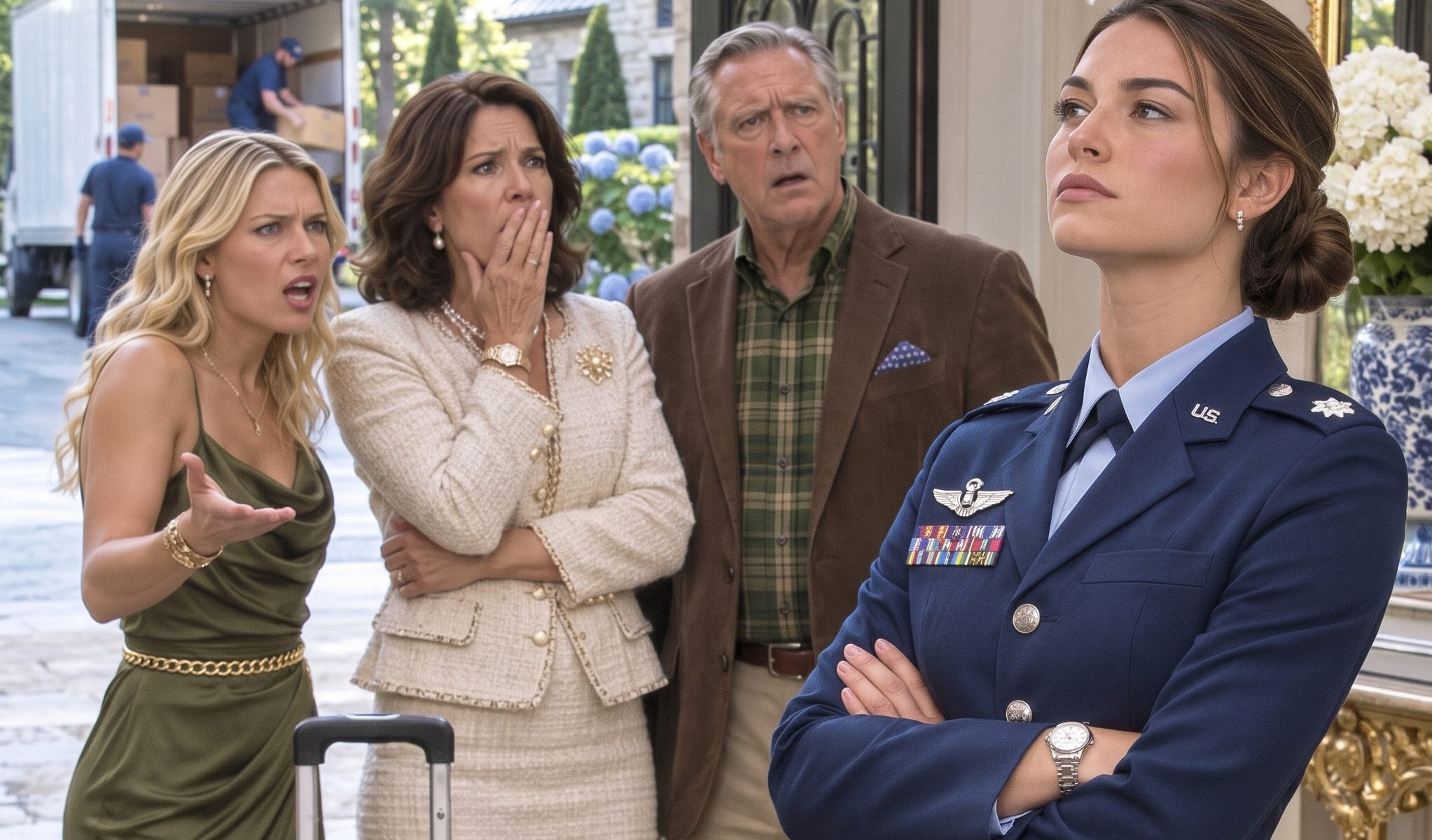
The movers had already lowered the ramp when Robert pointed toward the upstairs windows.
“Start with the bedrooms,” he told them. “The furniture up there needs to come down first.”
I stood on the porch with Harold’s empty white coffee mug in my hand. The moving truck was backing toward the driveway, and its engine made the kitchen clock difficult to hear through the open door.
“Robert,” Linda said, adjusting the cuffs of her sleeves. “Let Emily get settled first.”
“Settled?” Robert looked at her. “We’ve got a full day ahead of us.”
Brianna was already holding her phone up, taking pictures of the front windows.
“Obviously, the upstairs rooms should be emptied first,” she said. “The larger pieces will take more time.”
I carried the mug inside and placed it beside the sink.
Nobody had asked me whether I wanted a moving truck in the driveway.
Nobody had asked whether I agreed to let them remove Harold’s furniture.
Robert came through the doorway and pointed toward the stairs.
“Those two dressers can go first. The movers know what they’re doing.”
“They haven’t been given permission to move anything,” I said.
He looked at me as though I had interrupted a business meeting.
“Emily, we’re trying to get this handled.”
“Who is we?”
Linda stepped between us.
“Please don’t start this today.”
I looked at the truck through the open front door. One of the movers had already climbed down and was waiting for another instruction.
“Then tell them to wait.”
Robert turned toward the driveway.
“Give us a minute,” he called.
The mover nodded and stepped away from the ramp.
It was 8:12.
Harold’s funeral had ended the afternoon before. His flowers were still arranged in the living room, including the lilies that had cost sixty-eight dollars. I had paid for them because he had once told me that he liked white flowers.
Brianna glanced at the arrangement.
“We should probably get rid of those before they start moving things.”
“Leave them,” I said.
She lowered her phone.
“Nobody is trying to throw away the flowers, Emily.”
“Good.”
Linda walked past me into the foyer. She carried two folded black garbage bags, one under each arm.
“Here,” she said. “You can put your clothes in these.”
I looked at the bags.
“What clothes?”
“Your clothes. Your personal belongings. We thought it would be easier if you packed today.”
Brianna began measuring the hallway with the camera on her phone.
“That wall is narrower than I remembered. The large cabinet may not fit.”
Linda placed one garbage bag against my chest and held the other out.
“Take these upstairs.”
I did not take the second one.
“Where am I supposed to go?”
“We’ll work something out,” Linda said. “You are twenty-two. You can manage.”
I set the first bag on the floor.
She stared at it.
“Emily, I am trying to make this easier.”
“Then tell me where you expect me to live.”
“Don’t make this difficult.”
Brianna stopped measuring.
“Obviously, there’s no reason for everyone to argue. You can take your things, and we can get the house ready.”
“Ready for what?”
She looked at Linda.
Linda straightened her sleeves again.
“We need to discuss the property.”
“Then discuss it.”
My mother glanced toward the living room, where Harold’s photograph still stood beside the flowers.
“Not in the doorway.”
I picked up the two bags and placed them together beside the pantry. They were empty, and I left them that way.
Brianna returned to her phone.
“Can we at least measure the upstairs rooms?”
“Go ahead,” Linda said.
I watched them walk toward the staircase.
Neither of them asked why I had not packed.
At 8:45, Robert was in the kitchen opening drawers.
He pulled out a stack of old utility bills, looked at the first page, and put it back.
“Where did your grandfather keep the property papers?”
I was standing beside the counter, sorting the mail Harold had left in a wooden tray.
“Which papers?”
“The deed. The original tax records. Anything from the county.”
“Why?”
“Because we need to know what we’re dealing with.”
“You said the house belonged to the family.”
“It does.”
“Then why do you need the original deed?”
He closed the drawer.
“Don’t play games with me.”
I placed a bank statement back in the tray.
“I’m not.”
He opened another drawer, this one containing batteries, spare keys, and a small screwdriver Harold had used to repair the kitchen cabinet.
Robert moved the screwdriver aside.
“Your grandfather kept everything. He had a filing system for every little receipt.”
“He liked knowing where things were.”
“Exactly. So where are they?”
“I don’t know.”
Robert looked at me for several seconds.
“You lived here with him. You must have seen the papers.”
“I saw him put papers away.”
“Where?”
I folded the top of the mail tray closed.
“You keep asking about the originals.”
“Because copies aren’t always useful.”
“Useful for what?”
He took a step toward the counter.
“Emily, this is not a conversation you need to make difficult.”
I had heard that sentence before, usually when an adult wanted me to stop asking a question.
“What are you planning to do with the house?”
“That depends on what the estate allows.”
“Then shouldn’t we wait for the attorney?”
His hand stopped above the drawer.
“What attorney?”
“Grandpa had one.”
Robert shut the drawer carefully.
“Frank?”
I nodded.
Robert looked toward the hallway.
“Has he been here?”
“Not yet.”
“Did Harold leave you his number?”
I picked up the mail tray.
“Why does that matter?”
Robert did not answer.
He went back to the drawers, but this time he did not open them.
I carried the mail into the dining room.
On the table sat Harold’s old wristwatch, which I had taken off his bedside table before the funeral. Its leather strap was worn smooth where his thumb had rested against it.
I picked it up and moved it away from the papers.
Robert watched me do that.
“Did he give you that?”
“Yes.”
“When?”
“A long time ago.”
He looked at the watch again.
“Keep it safe.”
It was the first thing he had said that sounded like a request.
At 9:02, Brianna called from upstairs.
“Mom, this door is locked.”
I was halfway up the staircase when Linda reached the landing.
“Which door?”
“The study.”
Brianna was holding her phone in one hand and trying the handle with the other.
“Why would Grandpa lock this room?”
“He kept private papers in there,” Linda said.
“Then we need to open it.”
Brianna tried the handle again.
The brass lock did not move.
“Emily, where’s the key?”
I stopped two steps below them.
“I have it.”
“Then give it to me.”
“No.”
Brianna lowered her phone.
“Why not?”
“Grandpa asked me to keep it.”
Linda looked at the door.
“Harold was particular about that room. He didn’t like people going through his desk.”
“He’s not here now,” Brianna said.
“That doesn’t mean you should force the lock.”
Brianna gave her mother a puzzled look.
“Why are you defending a locked door?”
Linda adjusted the cuffs of her sleeves.
“I’m not. I’m saying we should wait.”
“For what?”
Linda glanced at me.
I had not expected her to be the one asking for patience.
“Emily,” she said, “did your grandfather leave any instructions about this room?”
I could have told her that he had.
Instead, I asked, “What would you do if I opened it?”
“Look at the papers.”
“And then?”
“Work out what needs to happen.”
“Who decides that?”
Linda did not answer.
Brianna stepped away from the door.
“Fine. We can wait. But I want to see what’s in there before anything gets moved.”
I looked at the brass lock.
Harold had given me the key on the morning of my eighteenth birthday. He had folded a small piece of paper around it, then put both in my hand.
“If your parents come back asking for the house,” he had told me, “don’t open the study just because they ask.”
I had asked him when I should open it.
“When everybody has had a chance to speak,” he said.
At the time, I thought he was talking about an argument that might never happen.
Now my mother and sister stood outside his locked study, and my father was downstairs searching his drawers.
“Grandpa told me not to decide anything until everybody had finished speaking,” I said.
Brianna looked at Linda.
“That’s a strange instruction.”
“It was his instruction,” I said.
Linda moved closer to me.
“Emily, nobody is trying to take anything from you.”
I looked at the two black bags downstairs.
“Then why did you bring those?”
Her expression changed.
“They were just to help you pack.”
“I haven’t asked for help packing.”
“You’re making an ordinary arrangement sound like something else.”
“Then tell me what the arrangement is.”
Linda looked toward the staircase.
Robert appeared at the bottom, holding a sheet of paper.
“What’s taking so long?”
“Emily won’t give us the study key,” Brianna said.
Robert looked up at me.
“Why?”
“Because Grandpa told me to keep it.”
He held up the paper.
“There’s no reason to keep the room locked. We need to establish what belongs to the estate.”
“Then ask Frank.”
Robert folded the paper once.
“I’ll deal with Frank.”
I looked at the page in his hand.
“What’s that?”
“An inventory.”
“Of what?”
“The property.”
“Who prepared it?”
He put the paper in his jacket pocket.
“That’s not important.”
It was the first time that morning he had hidden a document instead of searching for one.
Linda started down the stairs.
“Robert, let her have a little time.”
“We’ve already given her time.”
Brianna followed her mother, but Robert remained where he was.
“Emily, listen to me. The house needs to be handled properly. You don’t have to understand every detail.”
“I understand that you brought movers.”
“Because somebody has to make decisions.”
“Did you ask me?”
He looked toward the front door.
The truck was still in the driveway. Its ramp remained lowered, and the two movers were waiting beside it.
Robert called down to them.
“Come up here. We’ll start with the upstairs furniture.”
Linda turned around.
“Robert, wait.”
He ignored her.
I reached into my pocket and felt the brass key against my fingers.
The study door remained locked.
For seventeen years, I had waited for my parents to come back and behave like parents. Now they were standing in Harold’s house giving instructions to people they had hired, and I had to decide whether Harold’s final request meant more than the comfort of letting them have their way.
I did not open the study.
I did not ask them to leave.
I walked down the stairs, passed the two garbage bags, and stopped beside the kitchen table.
“Before anybody moves another piece of furniture,” I said, “I want everyone to finish what they came here to say.”
Robert turned toward me.
“That’s going to take all morning.”
“Then it will take all morning.”
He looked at Linda, then at Brianna.
Nobody spoke.
I put the brass study key in my pocket.
Robert pointed toward the upstairs hallway again.
“Bring the movers inside.”
One of the movers stopped at the bottom of the stairs and looked at me.
“Are these boxes going upstairs or into the truck?”
Robert answered before I could.
“Upstairs first. The bedroom furniture needs to come down before lunch.”
I carried Harold’s empty coffee mug through the kitchen doorway and set it beside the sink.
“Nobody has signed for anything yet,” I said.
Robert glanced at me.
“We’ll deal with the paperwork afterward.”
The mover held his clipboard against his chest. I looked at the line marked Customer Authorization. My name was printed there, although I had never given anyone permission to use it.
“Who put my name on that?”
Robert took the clipboard from him.
“It’s just the delivery paperwork, Emily.”
“I won’t sign it.”
He handed it back to the mover and told him to wait. The truck remained in the driveway, its rear doors open.
Linda came in carrying her purse and a small paper bag from the grocery store. She placed the bag on the counter without asking where anything belonged.
“Has anybody made coffee?”
“I haven’t.”
“Well, somebody should. We’ve got a long day.”
She opened the refrigerator, moved a carton of eggs, and looked inside as if she expected Harold’s kitchen to have changed its habits overnight.
I took two slices of bread from the bag and put them in the toaster.
“Where are the financial records?” she asked.
“In the house.”
“Emily, don’t start.”
“I’m answering your question.”
Linda straightened the cuffs of her sleeves. Then she noticed the envelope lying beside the toaster.
It had been delivered with Harold’s other mail. I had not opened it because I had been trying to get through breakfast without another argument.
She picked it up and turned it over.
“This is from the county.”
I reached for the envelope, but she had already slipped her finger beneath the flap.
“Property tax notice,” she said. “It’s addressed to the estate.”
The toaster clicked.
Linda unfolded the paper and read the amount due. Her expression changed before she reached the bottom.
“Who is supposed to pay this?”
“I don’t know yet.”
“Then we need access to the bank records.”
She put the notice flat on the counter and smoothed it with her palm.
“Your grandfather’s accounts have to be settled. Robert needs to see the statements.”
“Why does Dad need them?”
“Because he is handling the family finances.”
I took the toast from the toaster. One corner had turned almost black.
“Since when?”
Linda looked at me.
“Since your grandfather passed away.”
She folded the notice and slipped it into her purse.
“Get me the account books before the bank opens.”
I reached over and took the notice back.
“That belongs here.”
For several seconds neither of us moved. Then Linda let go.
“You’re making this harder than it needs to be.”
I put the notice in the kitchen drawer with Harold’s other county papers.
The kitchen clock showed 7:46. It was four minutes slow, as usual.
Linda picked up her purse.
“Your father wants everyone at the dining room table at nine.”
“Why?”
“He has something to show us.”
She left the grocery bag on the counter. Inside were three apples, a loaf of bread, and a jar of Harold’s favorite strawberry jam.
I put the jam in the refrigerator.
At nine, Robert spread a large sheet of paper across the dining room table. Brianna sat beside him with her phone in one hand and a calculator open on the screen.
“Come here, Emily.”
I stayed by the doorway.
“What is that?”
“A property assessment.”
Robert pressed the corners flat. A photograph of the house appeared near the top, followed by measurements, tax information, and an estimated market value.
$286,000.
Brianna leaned over the paper.
“That’s actually more than I thought.”
Robert tapped the figure with his index finger.
“That’s the current estimate. A proper inspection could put it higher.”
“Obviously, the kitchen needs updating,” Brianna said. “But the upstairs bedrooms are in good shape.”
She typed something into her phone.
“What are you calculating?” I asked.
“Furniture prices.”
“Why?”
“Because some of Grandpa’s furniture is worth quite a bit.”
She turned the phone toward Robert.
“The dining table could bring eight hundred. Maybe more if we find the right buyer.”
Robert nodded.
“We’ll have someone look at the house before making decisions.”
I pulled out a chair but did not sit.
“Who is someone?”
“A property agent.”
“Has one been hired?”
“Emily, we’re trying to make arrangements.”
“That wasn’t my question.”
Brianna smiled at her reflection in the dark screen of her phone before putting it down.
“Obviously, we can’t leave the house sitting empty forever.”
“I live here.”
She looked at Robert.
He continued examining the assessment.
“Nobody is suggesting you have to leave today. But the property has expenses. Taxes, insurance, utilities. Those costs have to come from somewhere.”
I pointed toward the county notice.
“Grandpa’s tax payment is due.”
“Which is why I need the financial records,” Linda said from the doorway.
She had come in without anyone hearing her.
Robert folded the assessment once, then opened it again.
“Let’s not get ahead of ourselves. We need to establish the value first.”
“Why establish the value if nobody has decided to sell?” I asked.
Brianna picked up her phone.
“We’ve already talked about it.”
That was the first time anyone had admitted it directly.
I looked at Robert.
“You’ve already discussed selling the house?”
He gathered the loose papers into a neat stack.
“We’ve discussed possibilities.”
“Without me?”
“You’re part of the discussion now.”
Brianna began entering another figure.
“Grandpa’s bedroom furniture could go with the other pieces. There’s a local market for older furniture.”
“Don’t list anything.”
She stopped typing.
“Excuse me?”
“Don’t list anything from this house.”
Robert put the assessment into his folder.
“We’ll talk about this when everyone is calmer.”
I watched him close the folder. There was a small printed notation at the bottom of the assessment, identifying the date it had been prepared.
It was from the previous week.
They had been planning before Harold’s funeral.
I went upstairs at eleven fifteen to retrieve the blue accordion folder. Harold had kept it in the bottom drawer of his desk, but I had moved it to my bedroom after the movers arrived.
Brianna followed me.
“What are you looking for?”
“Some papers.”
She stood beside the dresser while I pulled open the drawer.
“Is that Grandpa’s folder?”
“Yes.”
She reached toward it, then stopped when I put it on the bed.
“What’s in there?”
“Documents.”
“Obviously. What kind?”
I opened the folder just enough to check that the papers were still inside. There were envelopes, receipts, and several folded sheets arranged in Harold’s careful order.
Brianna sat on the edge of the bed.
“Mom says we’re supposed to collect the important paperwork.”
“Mom can speak to me about that herself.”
“She thinks you’re making things difficult because you don’t want to lose the house.”
I looked at her.
“Who said the house was being lost?”
Brianna examined her fingernails.
“Nobody wants you to be unhappy. But you can’t expect everyone to wait forever.”
I took the folder out of her reach and placed it on the dresser.
She noticed a brown bank envelope tucked between two papers. The number written across its front was large enough to read from where she sat.
$18,500.
She leaned forward.
“What’s that?”
“An old bank envelope.”
“Why does Grandpa have eighteen thousand five hundred dollars written on it?”
I picked it up.
“I haven’t looked through everything.”
“Was he keeping money for somebody?”
I slid the envelope back between the papers.
“Maybe.”
“Who?”
“I don’t know.”
Brianna stood and came closer.
“That seems like something we should know before the house gets divided.”
I closed the folder.
“Why do you keep saying divided?”
“Because that’s what happens with property.”
“Not always.”
She studied my face, then reached for her phone.
“Robert will want to see that.”
“He can ask me.”
Brianna opened the bedroom door.
“You’re acting as if we’re trying to take something from you.”
I placed the folder in the top drawer of my dresser and turned the small brass handle until it closed.
“Then you won’t mind leaving it alone.”
She did not answer.
A few minutes later, I heard her going downstairs.
I sat on the edge of the bed with the bank envelope in my hands. The amount was familiar now, but I could not remember ever seeing it before the day Harold passed away.
The envelope was addressed to Robert and Linda.
There was no explanation on the outside.
I put it back in the folder.
At two twenty, Robert was in the garage with the metal filing cabinet pulled away from the wall. He had opened every drawer except the bottom one, which stuck unless someone lifted the handle.
I stood beside the workbench.
“What are you looking for?”
“Insurance papers.”
“Those are in the kitchen.”
“Not these.”
He pulled out another drawer and moved a stack of old receipts.
Harold had kept the cabinet organized by year. The labels were written in black ink, each one the same size.
Robert looked through the folders without taking any of them out.
“Your grandfather changed his filing system near the end.”
“How do you know?”
“Because I helped him with some paperwork.”
I watched him remove a brown envelope from the back of the second drawer.
It was old, with a crease across the middle and a faded bank stamp in the corner.
Robert turned it over.
Then he opened the flap.
Inside was a copy of a settlement envelope, but the papers that should have been with it were missing.
He checked the back of the envelope, then looked through the drawer again.
“Where is the original?”
I did not answer.
He pulled out the next folder and searched through it.
“Emily, did you move any of these papers?”
“Some of them.”
“Where?”
“In a safe place.”
He stopped searching.
“What does that mean?”
“It means I moved them.”
“Which ones?”
I looked at the brown envelope in his hand.
“Why does the original matter so much?”
Robert placed the envelope on the workbench and opened another drawer.
“Because copies aren’t always enough.”
He said it quickly, as if he had answered before deciding whether he should.
I looked at the faded bank stamp.
The number $18,500 appeared again, written in smaller figures beneath the flap.
“Is this connected to the money in the envelope upstairs?”
Robert turned toward me.
“What envelope?”
“The one with eighteen thousand five hundred written on it.”
His fingers tightened around the edge of the drawer.
“Where did you see that?”
“In Grandpa’s folder.”
He looked toward the house.
“Did you read it?”
“No.”
“Did you show it to your mother?”
“No.”
He returned his attention to the filing cabinet, but he no longer moved through the papers at the same pace.
I stood beside him.
“You keep asking where the original is, Dad. Why does that matter so much?”
He closed the drawer.
“Because your grandfather had a habit of keeping documents that nobody needed.”
“Then why are you looking for this one?”
Robert picked up the brown envelope and slipped it into his jacket pocket.
“You’re too young to understand how property arrangements work.”
“I’m twenty-two.”
“That doesn’t make you an expert.”
“I didn’t say it did.”
He opened the bottom drawer and lifted the handle to release the catch. Inside were several empty folders and a small stack of receipts from five years earlier.
He searched each one.
Nothing.
Then he took the envelope from his pocket again and studied its front. For a second, his thumb covered the date.
I could still see the year.
Five years earlier.
“Was Grandpa doing business with you?” I asked.
Robert put the envelope down.
“Don’t start inventing stories.”
“I’m asking a question.”
“And I’m telling you to stop going through his private papers.”
He gathered the loose receipts and returned them to the drawer. One slipped onto the concrete floor.
I bent to pick it up, but he reached it first.
“Leave those alone.”
He pushed the drawer shut and turned the cabinet key.
I looked at the empty space where the brown envelope had been.
“Are you finished?”
“For today.”
Robert wiped his hands with a shop towel and walked toward the garage door.
“Emily, I want you to stop looking through Harold’s things.”
I remained beside the cabinet.
He had not asked about the will.
He had not asked about the funeral expenses.
He had not even asked whether I had found Harold’s insurance papers.
He had come looking for one particular document, and the copy in his hand had not been enough.
As he reached the doorway, his phone rang. He glanced at the screen and declined the call.
“Don’t tell your mother about that envelope,” he said.
Then he went inside.
I waited until I heard the kitchen door close before taking the brass key from my pocket and checking that it was still there.
Upstairs, the blue folder was exactly where I had left it.
I opened the drawer and took it out again.
This time I removed the bank envelope and turned it over carefully.
There was a second date beneath the amount.
October 12.
I had seen that date somewhere before.
I put the envelope back, closed the folder, and carried it downstairs. Robert was speaking to Linda in the dining room.
When I entered, he stopped talking.
Linda looked at the folder in my arms.
“What’s that?”
“Grandpa’s papers.”
Robert moved his chair away from the table.
“Emily, we already discussed this.”
“No,” I said. “You discussed it.”
He looked at the folder, then at me.
“Put it away.”
I kept hold of it.
For the first time since the movers had arrived, I was no longer wondering whether my parents had misunderstood what Harold wanted.
I was wondering what Robert was afraid I would find.
I waited until his footsteps had crossed the kitchen before I opened the drawer where Harold kept his appointment cards. There were three envelopes, a receipt from the pharmacy, and a small white card with a telephone number written in blue ink.
Frank’s name was printed across the top.
I carried the card to the kitchen table and looked at the clock. It was eight minutes slow, as usual. Robert had gone upstairs, and I could hear Brianna moving boxes in the hallway.
I dialed the number.
A man answered after the fourth ring.
“Frank speaking.”
“My name is Emily. I’m Harold’s granddaughter.”
There was a short silence.
“Yes, Emily. I was expecting your call.”
I held the appointment card between two fingers.
“Grandpa left your number. My parents have come back, and they’re talking about selling the house.”
“Are they?”
“They brought movers yesterday. My father has been searching through Grandpa’s papers. He wants the original property documents.”
Frank did not answer immediately.
“Have you found anything?”
“An old bank envelope. It has a payment for eighteen thousand five hundred dollars. My father became very interested when he saw it.”
“Did he tell you what the payment was for?”
“No. He told me to stop looking.”
Frank made a small sound, almost a sigh.
“Emily, I have instructions from your grandfather. I need to be careful about how I handle them.”
“Can you tell me whether my parents have a claim to this house?”
“Not until I have verified the original documents.”
I pressed the card flat against the table.
“What documents?”
“The originals that your grandfather placed in my care. Some records must be examined together. A copy of one page is not enough to establish the whole arrangement.”
“Do you have them?”
“I have certain documents. I also need to inspect what Harold kept at the property.”
I looked toward the upstairs hallway.
“When can you come?”
“This afternoon, if that works for you.”
“Please come.”
“I will. Until then, do not sign anything concerning the property. Do not authorize anyone to remove furniture or personal records.”
“I haven’t signed anything.”
“Good. Keep it that way.”
He asked whether Robert had found the original papers.
I told him I did not know.
“One more question, Emily. Has your father asked specifically about the study?”
I glanced at the brass key beside Harold’s old appointment card.
“He’s asked about the original property papers.”
“That isn’t quite the same question.”
“No. He hasn’t asked me about the study.”
Frank told me he would arrive at four fifteen. Before hanging up, he asked me to keep Harold’s appointment card.
I slipped it into the blue folder.
***
At ten thirty, Brianna was in the garden shed with a cardboard box balanced on top of an old wooden bench. She had wrapped two of Harold’s hand tools in newspaper and was checking their condition before putting them away.
“These could probably sell,” she said.
I moved a gardening box away from the shelf.
“Grandpa used those every spring.”
“Emily, he isn’t going to need them now.”
She placed a pair of pruning shears in the cardboard box.
I opened the gardening box and found a bundle of receipts held together with a rubber band. The top one was dated October of the previous year. It showed the county property tax payment, including the amount and the account from which it had been paid.
I turned it over.
Brianna watched me.
“What are you looking for?”
“Property tax receipts.”
“Why?”
“I want to see who paid them.”
She picked up another tool.
“Obviously Grandpa paid them. He lived here.”
“That’s what I thought.”
“Then why are you going through all those receipts?”
I separated the papers by year. There were five complete sets, each with a county payment confirmation.
Brianna put the shears down.
“Mom said the taxes would come out of the estate.”
“Did she?”
“Yes. Dad said we’d have to work out the bills before the house could be sold.”
I looked at the date on the oldest receipt.
“Who told you the house was being sold?”
Brianna shrugged.
“Dad spoke to someone.”
“Who?”
“A real estate agent. He said someone could come and look at the property.”
“When?”
“Before November tenth, I think.”
I stopped sorting.
“November tenth?”
“That’s what he said. He wanted the inspection done before the bank appointment.”
She reached for her phone and checked her reflection in its dark screen before putting it back in her pocket.
“What bank appointment?”
“Something to do with his business. I don’t know. He didn’t tell me the details.”
I placed the receipts in a neat pile.
“Did Dad tell the agent who owned the house?”
Brianna gave me a puzzled look.
“Obviously, he told them it was Grandpa’s property.”
“But Grandpa has passed away.”
“That’s why we’re sorting it out.”
She picked up the cardboard box again.
“Emily, you can’t expect us to leave the house sitting empty while you decide what to do.”
“I’m not deciding anything today.”
“Then what are you doing?”
I put the receipts into Harold’s blue folder.
“Checking the records.”
Brianna looked at the folder.
“Is that the same one you took upstairs yesterday?”
“Yes.”
“Mom wanted to see it.”
“She can ask me.”
Brianna pressed the cardboard flaps together.
“You’re making this harder than it needs to be.”
I reached for the last receipt at the bottom of the gardening box. It was dated five years earlier, and the payment confirmation carried Harold’s name.
I slipped it behind the others.
***
At one o’clock, Linda had set three plates on the dining room table. Robert was reading a folded sheet of paper, and Brianna had gone upstairs with her phone.
I brought the blue folder downstairs and placed it beside my plate.
Robert looked at it.
“What’s that?”
“Grandpa’s tax receipts.”
He folded his paper.
“Why are you collecting those?”
“Because I want to know who paid the property taxes for the last five years.”
Robert pushed his chair back slightly.
“That was family money.”
“Whose account?”
He picked up his glass.
“Money from the household. Your grandfather had arrangements with us.”
Linda stopped carrying a serving dish.
“That’s not right.”
Robert looked at her.
“What?”
“Harold paid the property taxes himself.”
She placed the dish on the table and adjusted the cuffs of her sleeves.
“He always paid them from his own account. I remember because he used to complain about the county sending the notices late.”
Robert put his glass down.
“Linda, that’s not what we’re discussing.”
“It is exactly what we’re discussing. You said the taxes came from family money.”
“They did.”
“Not from our account.”
I opened the folder and took out the oldest receipt.
“This one has Grandpa’s name on it.”
Robert glanced at the paper but did not touch it.
“That doesn’t prove who ultimately paid for the property.”
“Doesn’t the payment record show that?”
“Emily, you’re confusing household expenses with ownership.”
I kept the receipt in my hand.
“Then why did you say the taxes came from family money?”
Robert folded his paper again, making the crease sharper.
“Because Harold was part of the family.”
Linda sat down.
“He never asked us to pay those taxes.”
Robert turned toward her.
“You don’t remember every arrangement we had with him.”
“I remember paying our own bills.”
He looked back at me.
“Your grandfather handled the property. That’s what fathers do when they’re getting older. It doesn’t mean the property belongs to somebody else.”
I moved the receipt closer to the folder.
“Who was responsible for the taxes, then?”
Robert gave me a tired look.
“Emily, this is not the time to start questioning every decision your grandfather made.”
“When would be a better time?”
“After the estate has been properly reviewed.”
Linda reached for her fork but did not pick it up.
“Harold never wanted us involved in the accounts.”
Robert turned sharply toward her.
“That’s enough.”
She looked down at her plate.
I watched him for a moment. He had been certain when he said family money. Linda had corrected him without even looking at a receipt.
I put the paper away.
“Did Grandpa ever tell you that he wanted someone else to pay the taxes?”
Linda shook her head.
“No. He said he had them covered.”
Robert stood and took his folded paper.
“We’ll discuss this when Frank has been contacted.”
I looked up.
“Why Frank?”
Robert paused.
“Because estate matters are handled by attorneys.”
He left the room with the paper still in his hand.
Linda remained at the table.
“Your father doesn’t like being questioned.”
“I noticed.”
She moved the serving dish toward me.
“Eat something, Emily. You haven’t eaten properly since the funeral.”
I took a small portion.
For a few minutes, she talked about the price of groceries and the difficulty of keeping the old refrigerator running. She remembered that Harold always bought the same brand of bread, even when another brand was cheaper.
I almost smiled.
“He said the other bread tasted like the wrapping.”
Linda gave a short laugh.
“That sounds like him.”
Then she asked whether Frank would be coming to the house.
I put my fork down.
“Yes. This afternoon.”
Her hand stopped above the table.
“Did you tell him about the payment?”
“I told him about the envelope.”
She looked toward the doorway Robert had used.
“What did he say?”
“He wants to see the original documents.”
Linda folded her napkin.
“Then perhaps you should let your father handle the appointment.”
***
Frank arrived at four fifteen carrying a dark leather briefcase. He was a neat man with a calm voice, and he greeted me by asking whether I had kept the documents together.
I brought him into the kitchen.
“These are the property tax receipts,” I said. “Five years of them.”
He opened the blue folder and examined the first page. He checked the date, the amount, and the payment confirmation.
“Did you find these in the house?”
“In Grandpa’s gardening box.”
“Good. Did anyone remove or alter them?”
“No.”
He turned to the next receipt.
“These are useful.”
“Do they prove that Grandpa owned the house?”
Frank looked up.
“They prove that he paid these particular bills.”
“But Robert says the property belongs to the family.”
Frank returned his attention to the papers.
“That is a separate question.”
I pulled out the chair opposite him.
“Then what do we need to answer it?”
“First, the recorded ownership documents. Second, any agreements connected with the transfer. Third, the original records your grandfather kept here.”
“Is that why you need to see the study?”
“Yes.”
I glanced at the closed blue folder.
“Can you tell me what was in the agreement involving the eighteen thousand five hundred dollars?”
Frank placed the receipts in their original order.
“I can confirm that the payment was deliberate. It was not an ordinary household gift.”
I waited.
“Who received it?”
“Your parents.”
I looked down at the amount printed on the bank record.
“Both of them?”
“Yes.”
“Why did Grandpa give them that much money?”
Frank closed the folder halfway.
“That is something I need to establish from the original settlement before I explain its terms.”
“Was it connected to this house?”
He did not answer directly.
“It was connected to your grandfather’s property arrangements.”
I looked toward the hallway.
“My father has been searching for the original papers.”
“I gathered that from what you told me.”
“He knows something is there.”
Frank rested one hand on the folder.
“Your father may know more than he has told you.”
I looked at him.
“Does he know you have the documents?”
“Not all of them.”
“Could he stop you from showing them to me?”
“No. But I will not give you an incomplete explanation and leave you to defend it against your parents.”
I moved the folder toward him.
He gently pushed it back.
“Keep this here, Emily. I don’t want these receipts separated from the other records. The originals must be reviewed in the study, not removed from the house.”
“Then why not open it now?”
“Because I have not yet verified that the documents I need are all present. I would rather do this once, properly.”
He asked whether Robert and Linda would be available for a meeting later in the week.
“I don’t know.”
“Ask them to be available. Do not tell them what I intend to produce.”
I closed the folder.
Frank looked at the brass key beside the appointment card.
“Keep that with you.”
I picked it up.
“Grandpa told me to use it if they came back.”
Frank’s expression changed slightly.
“Did he tell you anything else?”
“He said everyone should have a chance to speak before I made a decision.”
Frank nodded.
“Then let them speak.”
He lifted his briefcase and stood.
“Emily, I need you to understand that a receipt and an ownership document are not the same thing.”
“I understand.”
“Good. We will need both.”
He walked to the front door and stopped beside the narrow table where Harold used to leave his mail.
“One more question. Has your father mentioned November tenth?”
I looked at him.
“He arranged for a real estate agent to inspect the house before then.”
Frank set his briefcase down again.
“Who told you that?”
“Brianna.”
He took a small notebook from his coat pocket and wrote the date.
“That gives us less time than I would have preferred.”
“Can he sell the house?”
Frank put the notebook away.
“That depends on what the original deed says.”
He picked up his briefcase.
I followed him to the door.
“Will you come back?”
“Yes. And when I do, I want everyone present.”
He stepped outside, then turned once more.
“Do not let anyone persuade you to hand over that key.”
I closed the door and slipped the brass key into my pocket.
Upstairs, a door opened.
Robert called my name.
Then he asked who had just left the house.
Robert had already pulled out the chair at the head of the dining table when I came downstairs.
He had placed three sheets of paper beside Harold’s old wooden salt shaker. Linda sat across from him, sorting through a stack of mail with her reading glasses halfway down her nose.
“Sit down, Emily,” Robert said. “We need to get some decisions made.”
I took the chair nearest the kitchen doorway.
“What decisions?”
He pushed one of the papers toward me. It was a list of household expenses, written in his handwriting. Property taxes, electricity, water, insurance, and a figure for lawn maintenance.
“You cannot expect your mother and me to manage this house without knowing what you intend to do.”
“I have a question first.”
Robert leaned back.
“Go ahead.”
“Did you and Mom sign an agreement with Grandpa concerning this house?”
Linda stopped sorting the mail.
Robert looked at me for several seconds, then picked up his coffee.
“What kind of agreement?”
“One involving the property.”
“Emily, your grandfather handled his estate planning years ago. There were arrangements, certainly. But you are confusing ordinary paperwork with actual ownership.”
“Did you sign something?”
He put his coffee down.
“Your grandfather liked to have everything documented. That does not mean every document gives someone ownership.”
Linda adjusted her sleeves.
“Why are you asking him that?”
“Because he keeps asking about the original property papers.”
Robert looked toward the hallway.
“I asked where the papers were because someone needs to know what is in the house. That is perfectly reasonable.”
“Then why not answer my question?”
He folded the expense list in half.
“Because you are making assumptions about legal matters you do not understand.”
I looked at Linda.
“Did you sign anything?”
She picked up another envelope.
“Your grandfather handled those arrangements. I was not involved in all his decisions.”
Robert turned toward her.
“Linda.”
She lowered the envelope.
“What?”
“That is enough.”
The kitchen clock showed eight seventeen. Harold had always said it was easier to replace a clock than teach it to keep proper time, but he had never replaced this one.
I looked at the property tax figure on Robert’s list.
“Who paid the taxes for the last five years?”
“Family money,” Robert said.
Linda shook her head.
“Harold paid them.”
Robert turned sharply.
“He paid them from his account,” she added. “I saw the checks.”
Robert took the paper back and straightened its edges.
“That is beside the point. He was the owner. He had responsibilities.”
“And now?”
“Now we have an estate to settle.”
I waited for him to say that he had signed nothing. He never did.
Instead, he gathered the papers and placed them inside his leather folder.
“Your grandfather’s arrangements were complicated. You should not make decisions based on half a conversation.”
“What should I make them based on?”
“Common sense.”
Linda stood and carried the mail toward the kitchen.
Robert followed her with his eyes before turning back to me.
“Do not let grief make you suspicious of everyone.”
He left the dining room without taking his coffee.
I stayed at the table, looking at the empty space where his papers had been.
For seventeen years, I had been expected to accept decisions made without me. Now I was being told that asking a question was another mistake.
At ten forty-five, Brianna had moved three feet of furniture away from the living room wall.
She stood with her phone held upright, taking photographs of Harold’s wooden cabinet and the matching pair of lamps.
Linda sat on the sofa, reading something on her phone.
“That cabinet would probably sell for four hundred,” Brianna said. “Maybe more if we find the original receipt.”
“Please don’t list it.”
She lowered her phone.
“Why?”
“Because nobody has established what happens to the property yet.”
Brianna gave me a small smile.
“Obviously, we have to sort out the furniture before the house is sold.”
“Nobody has agreed to sell it.”
“Emily, you cannot keep every piece of furniture.”
“I haven’t said I would.”
She turned her phone toward the cabinet again.
“Then what is the problem?”
“Don’t advertise anything or arrange for anyone to collect it.”
Linda put her phone down.
“Why are you being so difficult?”
“I am asking her to wait.”
“Your father is trying to handle the practical matters. You are making every little thing into an argument.”
Brianna walked over to the side table and moved a small framed photograph so it would look better in her picture.
“Mom, I was thinking we could put the cabinet online today. People like these older pieces.”
“Not today,” I said.
She looked at me.
“You’re not even using it.”
“That doesn’t make it yours.”
Linda stood.
“Emily, your grandfather would never have wanted us treating each other this way.”
I looked at her.
“Then why are you helping Brianna sell his furniture?”
She straightened the cuffs of her blouse.
“We are trying to make arrangements.”
“Without asking me.”
“Because you are making it impossible to discuss anything.”
Brianna put her phone into her pocket and examined her reflection in its dark screen.
“I don’t understand why you need to be involved in every decision.”
I moved the framed photograph back to its original place.
“Because this is Harold’s house.”
Linda’s expression changed.
“Your grandfather’s house,” she corrected. “Not yours to control.”
I picked up the photograph. It showed Harold standing beside the garden fence, holding a basket of tomatoes. The basket had been made from thin wire, and one handle was always coming loose.
Brianna reached for it.
“That one is probably worth something too.”
“Put it down.”
She withdrew her hand.
Linda walked toward the doorway.
“Your father has been under enough pressure without having to deal with this.”
“Then perhaps he should answer a simple question.”
She stopped.
“You have been listening to too many people who want to make trouble.”
I did not ask which people she meant.
Brianna returned to photographing the lamps, but she no longer moved the furniture. I went upstairs and brought Harold’s blue accordion folder into my bedroom, placing it behind the drawer where I kept my clothes.
When I returned, Linda was examining the cabinet again.
“Your grandfather would be ashamed of this,” she said.
I looked at the photograph in Brianna’s hand.
“Please put that back.”
Neither of them answered.
At one twenty, Robert came onto the front porch carrying a white envelope and a printed document.
He had removed his jacket and rolled his sleeves neatly to his elbows.
“Emily, I want you to look at something.”
I stayed near the door.
“What is it?”
“An ownership summary. I had it prepared so we could stop going around in circles.”
He handed me the paper.
The first paragraph described Harold as the previous owner of the property. The second referred to the house as an inherited family asset. There was a section listing the estimated value and another describing the responsibilities associated with transferring the property.
The figure of $286,000 appeared near the bottom.
I read the page twice.
“Who prepared this?”
“It is a standard summary.”
“That isn’t what I asked.”
Robert took a step closer.
“It came from someone familiar with property transfers.”
I looked for a county recording number. There was a date, a typed description of the property, and a signature line near the bottom.
There was no recorded ownership information.
“Where is the deed?”
“This is the document we need for now.”
“Where is the county recording number?”
He reached for the page.
“That is not necessary for what we are discussing.”
I held it a little longer.
“Then why does it describe the house as inherited?”
“Because that is the basis of the estate.”
“According to whom?”
Robert took the paper from my hand.
“You are getting stuck on technical details.”
“I am asking about ownership.”
“And I have given you a document describing the arrangement.”
“It doesn’t show who owns the house.”
He folded the paper once.
“You have no idea how these matters work.”
“Then explain it.”
He slipped the document back into the envelope.
“Your grandfather’s will is the important document. Everything else can be dealt with afterward.”
“Does the will name you?”
His face tightened.
“That is not something you need to concern yourself with right now.”
“Why not?”
“Because you are not thinking clearly.”
He put the envelope inside his jacket.
I looked at the empty place where the paper had been.
“Could I take a photograph of it?”
“No.”
“Why?”
“Because I brought it here for you to read, not to distribute.”
He walked toward the steps.
“Your mother is trying to keep this family together. You should be helping her instead of questioning every decision.”
I watched him go down the steps.
At the bottom, he turned around.
“And Emily, stop telling people you own something before the estate has been settled.”
Then he left.
I stood by the door for several minutes. The document had been in my hands long enough for me to notice what it did not contain, but not long enough to make a copy.
That bothered me more than I expected.
I went inside and found the telephone number for Frank’s office on Harold’s appointment card. I placed it beside the blue folder, then put the card back in my pocket.
I had not called yet.
At five thirty, Linda was in the kitchen with Brianna, sorting through a drawer of serving spoons.
A small cardboard box sat on the floor. Brianna had written KITCHEN on one side in thick black marker.
I put a glass in the sink.
“Are you packing those?”
Brianna held up a silver serving spoon.
“Just the pieces we don’t need.”
“Please leave them.”
She dropped the spoon into the drawer.
“You’re making this ridiculous.”
Linda closed the drawer.
“Emily, we need to talk about your attitude.”
I turned off the tap.
“What about it?”
“Your father is trying to help. Brianna is trying to make arrangements. You are treating both of them as though they have done something terrible.”
I looked at the cardboard box.
“They are packing Harold’s belongings.”
“Because there is a house to settle.”
“Nobody has shown me a deed.”
Linda gave a short laugh without smiling.
“You keep saying that word as though repeating it will make you an attorney.”
Brianna leaned against the counter.
“Mom, I don’t think she wants us here.”
Linda looked at her.
“She has made that perfectly clear.”
“I haven’t asked anyone to leave.”
“You have made the funeral difficult enough,” Linda said. “We buried your grandfather, and instead of allowing the family to make arrangements, you keep questioning your father.”
I dried my hands on a dish towel.
“Did you sign an agreement with Harold?”
Linda’s eyes moved toward the kitchen window.
“Why do you keep asking me that?”
“Because nobody will answer.”
“There were financial arrangements years ago. Your grandfather was responsible for handling them.”
“What arrangements?”
She opened the drawer again and began moving the serving spoons from one side to the other.
“You should have trusted him enough to leave the paperwork alone.”
“That is what I am trying to do.”
“No, you are making his funeral difficult for everyone.”
Brianna picked up her phone.
“Honestly, Emily, you should take your belongings and move out. Then we can sort out the house without all this.”
I looked at her.
“Move out?”
“Yes. You have your clothes, your personal papers, whatever else belongs to you. You could rent somewhere until the estate is settled.”
Linda nodded.
“It might be better for everybody.”
I looked toward the pantry.
The two black garbage bags were still beside it, exactly where they had been left. One had fallen slightly open, showing the edge of an old towel.
I moved them closer to the wall so nobody would trip.
“Is that what you both wa