75 views
My husband looked me in the eyes and said,
“You wanted to be a mother, so act like one,”
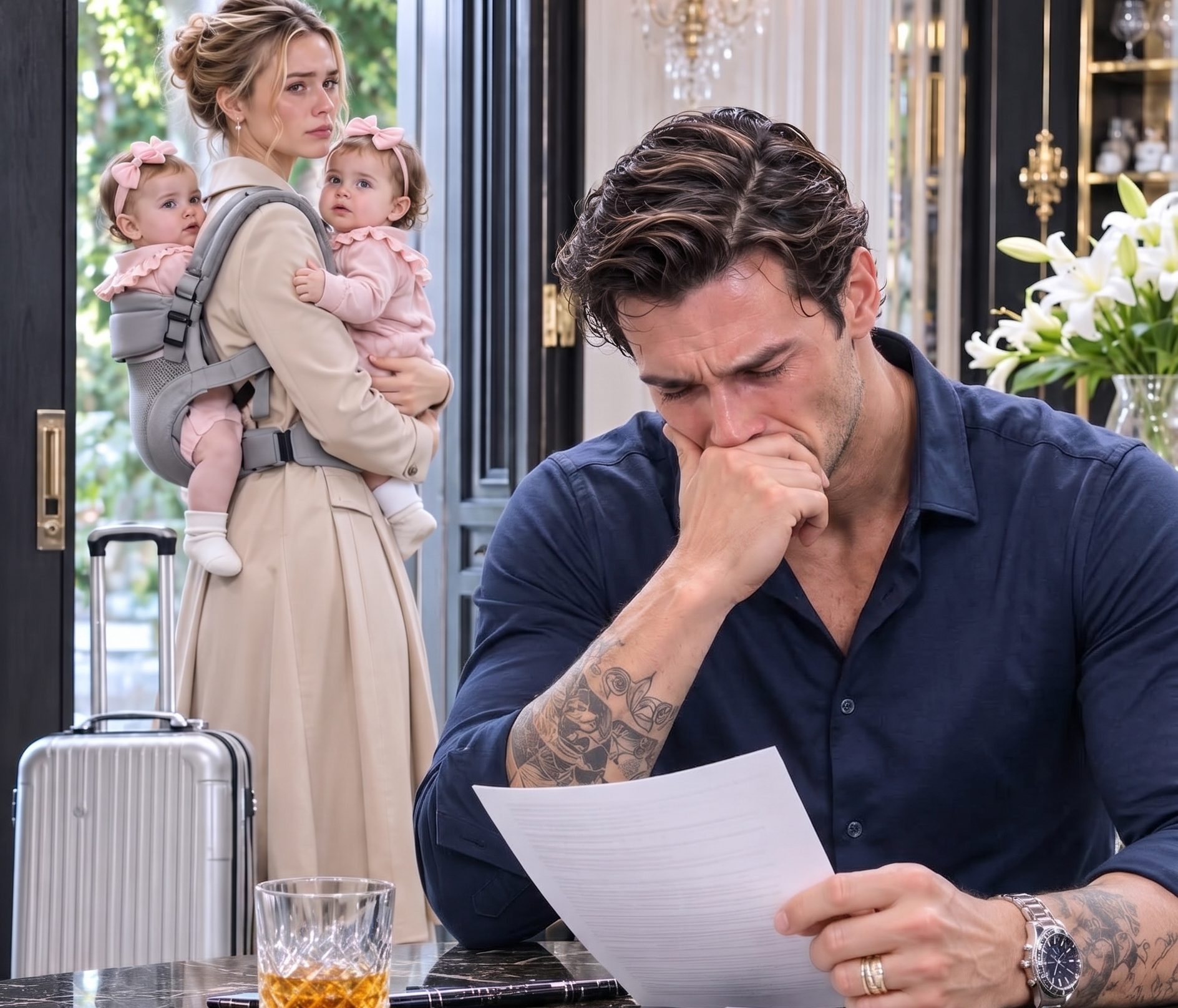
then walked out and left me alone with our six-month-old twins
while he went on vacation with his friends. Four days later, Garrett came home expecting
the same exhausted wife, the same crying babies,
and the same life waiting for him. Instead,
he opened the front door, took one step inside—and stopped dead.
Garrett and I had wanted children for years.
We’d talked about baby names before we were even sure
we could have kids. We imagined Sunday mornings,
family photos, tiny shoes by the door,
and all the ordinary little moments we had waited so long to experience.
Then we found out I was pregnant with twins.
For months, we told everyone how lucky we felt.
Then our daughters were born.
By the time they were six months old,
I was exhausted in a way I hadn’t known existed.
My days blurred together into feedings, diapers,
laundry, bottles, crying, burp cloths, and trying
to calm two babies at the same time on almost no sleep.
Some mornings, I couldn’t remember whether I had eaten breakfast.
One night, both girls were overtired and screaming.
I had one baby against my shoulder while gently bouncing
the other in a bassinet with my foot.
Garrett entered the kitchen.
I looked at him and asked for one thing.
“Could you wash the bottles?”
He let out a long sigh.
Then he looked around the room.
“There are bottles everywhere. The babies are always crying. You’re always stressed.”
He continued as if I were the problem he had been waiting to discuss.
“I’m tired of coming home to this.”
I looked down at our daughter in my arms.
“She’s six months old, Garrett. They both are.”
“I know that.”
“Then help me.”
Instead of answering, he entered our bedroom.
Soon afterward, I followed him and found him packing a duffel bag.
“What are you doing?”
“Going fishing.”
“What?”
“Four days. With the guys.”
I actually laughed once because I was sure he had to be joking.
He wasn’t.
“You’re leaving me alone with two infants for four days?”
“I need a break.”
“So do I.”
He continued packing.
I told him I hadn’t slept properly in months. I told him I was barely keeping up and that I needed him to act like their father, not like someone occasionally visiting the house.
Garrett zipped the bag.
Then he looked at me and shrugged.
“You wanted to be a mother, so act like one.”
I just stood there.
After everything we had gone through to have those babies, those words hit harder than I expected.
I didn’t yell.
I didn’t beg him to stay.
I stepped aside and let him walk out.
The next four days were brutal.
But somewhere between the midnight feedings, the crying, the exhaustion, and the silence after both babies finally fell asleep, something inside me changed.
I stopped thinking about how to make Garrett understand.
I began thinking about what my daughters and I actually needed.
By the fourth day, I had made a decision.
Garrett came home that afternoon.
I heard his key turn in the lock.
He opened the door like he was returning to the same life he had abandoned.
Then he stepped inside.
And stopped dead in the doorway.
PART 2: The Suitcase by the Door
The first thing Garrett saw was his suitcase.
It stood upright beside the entryway, his fishing rods leaned neatly against the wall beside it, and the duffel bag he had taken with him rested on top.
For one suspended moment, he didn’t move.
Then his gaze shifted past the bags and found the living room.
Our daughters were asleep in their bassinets, their small chests rising and falling beneath light cotton blankets.
My mother, Ruth, sat on the couch with a folded burp cloth in her hands.
My father, Daniel, stood near the kitchen, holding two mugs of tea.
Garrett’s face changed as he took it all in.
“What’s going on?”
I stood slowly, careful not to wake the girls.
“They’re asleep,” I said.
“I can see that.”
“Why are my things by the door?”
I was grateful for that promise all afternoon.
“Because I packed them,” I said.
Garrett stared at me.
“You packed my things?”
“I packed what you brought home.”
He looked down at the suitcase, then back at me.
“I just got back.”
“I know.”
His gaze went to the babies again.
“Why are your parents here?”
“They came to help.”
“You called them?”
“Yes.”
“When?”
“Yesterday.”
“You made all these decisions without even talking to me?”
Instead, I checked our daughters.
“I needed help,” I said.
“That doesn’t answer my question.”
“It does, Garrett.”
“We’re going to give you two a little space,” she said quietly.
“Mom, I didn’t say you had to leave.”
“I know,” she replied.
“But this is between us.”
“It is,” Ruth said, her voice warm but steady.
“And she can decide who supports her.”
Daniel picked up the tea mugs.
“Your daughters are fine,” he told Garrett.
“They’ve been fed, changed, and sleeping for almost forty minutes.”
The details seemed to unsettle Garrett more than the packed bags had.
“Forty minutes?”
“Give or take,” Daniel said.
Garrett looked at me.
“You’ve got them on some kind of schedule now?”
“No schedule,” I said.
“Just a better idea of what they need.”
He gave a small, disbelieving laugh.
“You couldn’t tell what they needed before?”
“I could,” I said.
“I was just trying to figure it out while doing everything else.”
“You can say hello,” I told him.
“Hey, sweetheart,” he whispered.
“Are they both okay?”
“They’re fine.”
“Did either of them get sick?”
“No.”
“Did you take them to the doctor?”
“No.”
“Then why did you call your parents?”
“Because I was tired of being the only adult in the house.”
“That’s not fair.”
“I’m not trying to make you the villain,” I said.
“I’m telling you how it felt.”
He looked toward Ruth and Daniel.
“And they’re taking the girls?”
“They’re not taking them anywhere,” I said.
“They offered us a place to stay.”
“Us?”
“Me and the girls.”
His eyes went still.
“You’re leaving?”
“I’m going to stay with them for a while.”
“When?”
“Tomorrow morning.”
“Tomorrow?”
“I wanted to wait until you were home.”
“Then you could have waited until I got home to talk to me.”
“I did wait.”
He glanced at the bags again.
“You had plenty of time to pack.”
“I had four days.”
“That’s not what I mean.”
“I know what you mean.”
Garrett lowered his voice.
“You’re taking our daughters to your parents’ house because I went on a fishing trip?”
“I’m staying somewhere I can get help.”
“You could have called me.”
“I did call you.”
“When?”
“Before you left.”
Ruth and Daniel moved quietly toward the kitchen, giving us the space he had asked for without leaving the house entirely.
Garrett rubbed the back of his neck.
“I thought you were upset,” he said.
“I was.”
“I thought you’d calm down.”
“I didn’t need to calm down, Garrett.”
“I just needed a break.”
“I understand that.”
“I hadn’t been away in months.”
“Neither had I.”
“I didn’t think you’d actually go.”
“That’s part of the problem.”
“What is?”
“You thought I’d manage.”
“I thought you were strong.”
“That sounds like a compliment, but it means you left me alone because you assumed I could survive it.”
Garrett tugged at the cuff of his jacket.
“I didn’t mean what I said.”
“I believe you didn’t plan to hurt me,” I said.
“That’s not the same as forgiving me.”
“No.”
“I’m sorry.”
Garrett glanced at the bags.
“What happens now?”
“I’m going to my parents’ place with the girls.”
“For how long?”
“I don’t know.”
“You don’t know?”
“I’m not deciding the rest of my life tonight.”
He let out a slow breath.
“I thought we were okay.”
I almost laughed, but there was no humor in me.
“We weren’t.”
“Why didn’t you tell me?”
“I tried.”
“You asked me to wash bottles.”
“I asked you to help.”
“That’s not the same as telling me our marriage was in trouble.”
“I didn’t know our marriage was in trouble,” I said.
“I knew I was drowning.”
“I thought you were handling it,” he said at last.
“I was handling it because the babies needed to be handled.”
“I can do more.”
“You should have been doing more already.”
“I know.”
“Do you?”
“Can I hold her?” he whispered.
“Not right now.”
“She just fell asleep,” I explained.
“And I don’t want to wake her.”
“Okay.”
He stood beside the bassinet for another few seconds, watching her breathe.
“Where’s the other one’s bottle?”
“In the refrigerator.”
“Which one?”
“The one with the blue cap.”
He opened the refrigerator, then stopped.
“Which baby gets which?”
“They both get the same formula.”
“Then why are they labeled?”
“To keep track of what time I made them.”
He touched the tape on one bottle.
“That’s a lot of work.”
“It helps me remember.”
“Do you have to keep records of everything now?”
“No.”
“I started writing things down.”
His hand paused on the refrigerator door.
“What things?”
“Feedings. Diapers. Chores.”
“Why?”
“So I could see what I was actually doing.”
“You needed a list to know that?”
“I needed the truth in front of me.”
“What does that mean?”
“It means I kept telling myself I was tired because babies are hard, and that you were helping when you could.”
“I did help.”
“Sometimes.”
“I wrote down the nights you were home. I wrote down when you handled a feeding or a diaper change, and when I did.”
“You’ve been keeping score.”
“No.”
“It sounds like keeping score.”
“I’m not building a case against you.”
“Then why write it down?”
“Because every time I tried to explain how alone I felt, I started doubting myself.”
“I would think maybe I was exaggerating, or maybe you did more than I remembered, or maybe I was just too tired to see it clearly.”
“And this helped?”
“It showed me what was happening.”
“How long have you been doing that?”
“A few weeks.”
“Why didn’t you tell me?”
“I didn’t know how to say it without turning it into another argument.”
“You could have tried.”
“I did try.”
“I mean before it got to this point.”
“I didn’t know it had gotten to this point until I wrote it down.”
Garrett ran a hand over his hair.
“What else did you write down?”
“Nothing about your character.”
“I’m asking what else.”
“I wrote down how I was feeling.”
“And?”
“And I talked to someone.”
His eyes lifted sharply.
“Who?”
“A postpartum support counselor.”
The words seemed to rearrange his attention.
“When?”
“Last week.”
“Why didn’t you tell me?”
“I was going to.”
“When?”
“When I could say it without feeling like I had to prove I deserved help.”
He looked down at his hands.
“Are you depressed?”
“I don’t know.”
“Did she say you were?”
“She wasn’t there to diagnose me.”
“Then what did she say?”
“She listened.”
“Did she think I was the problem?”
“She didn’t make it about you.”
“That’s not what I asked.”
“She asked me what my days looked like. She asked when I slept and who I could call.”
“She told me exhaustion and isolation can affect you more deeply than you realize.”
Garrett looked toward the girls.
“Are you saying I made you sick?”
“No.”
“But you’re saying I left you alone.”
“Yes.”
He shut his eyes for a second.
“I thought you were okay.”
“I know.”
The counselor had asked me what I needed in the next few days.
I had told her I needed sleep.
Garrett stared at me.
“You’re really going?”
“Yes.”
“Tomorrow morning?”
“Yes.”
“Because of the counselor?”
“Because I need help.”
Instead, he walked back toward the bassinets.
He just stood and watched them.
“Do they know we’re leaving?” he asked.
“They’re six months old.”
“I know that.”
“They know my voice and your voice.”
He inclined his head, embarrassed by the question.
“I’m not trying to keep them from you.”
“Then why are your parents here instead of me?”
“Because you’re here now, but you weren’t here for the last four days.”
The answer left no room for comfort.
“I’ll come visit.”
“We can talk about that.”
“What does that mean?”
“It means we can work out a plan when we’re not both standing in the entryway with the babies asleep and your things packed.”
“You could have left it inside.”
“I could have.”
“Why didn’t you?”
I considered the first night he left.
“Because I needed to know I could make a decision for myself,” I said.
Garrett had returned from four days away expecting the house to be waiting for him exactly as he had left it.
“What are you doing?” I asked.
“Taking my things upstairs.”
“I packed them so you could take them when you’re ready.”
“I’m not leaving.”
“I didn’t ask you to.”
“Do you want me to leave?”
“I want you to understand that I’m not staying here tonight just because you’ve come home.”
“You want me to sleep somewhere else?”
“I want you to decide what you need to do without making me manage it for you.”
He stood again and left the suitcase where it was.
I lifted one hand.
“She’s okay,” I whispered.
Garrett lowered his hands.
“I don’t know what I’m supposed to do,” he said.
“Right now?”
“Yes.”
“Right now, let her sleep.”
“And after that?”
I turned the mug between my palms.
“After that, we take it one thing at a time.”
Ruth came to stand beside me.
“We should get the girls’ things ready for tomorrow,” she said softly.
My mother had made the list earlier while I fed one twin.
Then I noticed Garrett watching too.
“Can I help?” he asked.
“You can fill the bottle cooler,” I said.
He inclined his head and went to the kitchen.
He opened the cupboard and reached for the insulated bag, then stopped.
“Where are the ice packs?”
“Top drawer in the freezer.”
He opened the freezer and found them.
“Two or one?”
“Two.”
“Do I pack all of these?”
“The three in the refrigerator.”
He lifted each bottle carefully, reading the labels.
When he finished, he put the cooler beside the diaper bag.
“Anything else?”
“The girls’ extra clothes are in the basket by the couch.”
“Do you need these tonight?” he asked.
“No.”
“Then I’ll put them with the bags.”
He carried the basket toward the entryway.
The top half showed a simple list of feedings and diaper changes.
I cannot keep pretending I am fine just because everyone else is comfortable.
“I didn’t mean for you to read that,” I said.
“Is that what you think I’ve been doing?”
I held the page against my chest.
“It’s what I was doing.”
“Everyone else?”
“I was talking about more than you.”
“Your parents?”
“Sometimes.”
“Me?”
“Sometimes.”
He took a slow breath.
“I didn’t know you felt that alone.”
“I know.”
Garrett looked at her, then at Daniel.
“What did I miss?” he asked.
Daniel lowered his eyes to the bottles packed in the cooler.
“You should ask her,” he said at last.
“I don’t think we can solve everything tonight,” I said.
“I understand.”
“I’m not sure you do yet.”
I moved to the first bassinet, while Garrett went to the second.
Garrett held his daughter close to his chest.
“She likes slower,” I murmured.
“Like this?”
“Slower still.”
Garrett watched her as if she had just told him something important.
“What song do you sing to them?” he asked.
“Anything, really.”
“What do they like?”
“Usually something quiet.”
The following morning, Ruth would drive us to her house.
When the girls were calm again, Garrett eased his daughter into her bassinet.
“Can I call you tomorrow?” he asked.
“Yes,” I said.
“Will you answer?”
“If I can.”
Ruth carried the packed diaper bag to the entryway.
Daniel lifted the bottle cooler.
Then he noticed the notebook still tucked beneath my arm.
“Can I ask you something?” he said.
“Did you write down anything from before the trip?”
“Yes.”
His face went pale.
“What did it say?”
I opened the notebook, but I didn’t hand it to him.
“It says what happened.”
Instead, I turned to the page and read the final line aloud.
“Garrett left for four days after I asked him to help with the bottles.”
“What does that last part mean?” he asked.
I held the cover shut.
“It means I finally told someone the truth.”
His gaze lifted to mine.
“Which truth?”
Before I could answer, Ruth came back from the hallway with my coat.
The girls were quiet in our arms.
The suitcase waited by the door.
And Garrett stood between us, looking at the notebook as if he understood that the most important thing I had packed was not in any bag.
Part 3 – The Work No One Saw
“What truth?” Garrett asked again.
“The truth about what my days have been like,” I said.
Garrett’s eyes stayed on the notebook.
“Could I read it?”
“Not now.”
Ruth held the front door open while Daniel carried the bottle cooler outside.
“We’ll talk tomorrow,” I said.
“I’ll call.”
“I know.”
Daniel sat beside Ruth in the front seat, one hand resting on the folded list of feeding times.
“You don’t have to unpack everything,” Ruth said.
“We can do it later.”
“I should get the girls settled.”
“We can help.”
“I know.”
Daniel took the other one without making a fuss.
Ruth had placed two bassinets near the window.
“You thought of everything,” I said.
“Not everything,” Ruth replied.
“But enough for today.”
Ruth touched my arm.
“Do you want to lie down?”
I opened my mouth to say no.
“Yes,” I said.
I slept for nearly three hours.
I settled up so quickly the blanket fell to the floor.
“I’m sorry.”
Ruth looked over at me.
“For what?”
“I didn’t mean to sleep that long.”
“You needed to.”
“I should have heard them.”
“You heard them now.”
My father glanced over from the window.
“We’ve been practicing,” he said.
“Your mother and I are a little out of practice.”
Ruth gave him a look.
“You were always out of practice.”
Daniel smiled, and the ease between them made something in me loosen.
The other made a small, offended sound in Ruth’s arms.
“Would you like me to take her?” I asked.
“If you want to.”
Ruth handed the baby over, and the movement was so ordinary that I almost cried again.
Later, after the girls had eaten and the bottles were washed, Daniel brought me a bowl of soup.
“You should eat before it gets cold,” he said.
“I’m not that hungry.”
“I know.”
Garrett called shortly after seven.
I’m sorry for what I said.
Please tell the girls I love them.
I read the message twice before setting the phone down.
“You can answer whenever you’re ready,” she said.
“I know.”
I don’t expect you to decide anything tonight.
I typed, We’re here, and the girls are fine.
I stopped before adding anything else.
The following morning, he called again.
“Hi,” I said.
“Hi.”
“Are the girls okay?”
“They’re good.”
“Did they sleep?”
“Some.”
He gave a short breath that might have been a laugh.
“That’s something.”
“Yes.”
“Can I come by?”
“Not today,” I said.
“Okay.”
“I think the girls need a little time to settle.”
“Do they?”
“I do.”
“I understand.”
“Thank you.”
“Could I come tomorrow?”
“I’ll let you know.”
“Okay.”
I heard him draw a breath.
“I’ve been thinking about what you said.”
“Which part?”
“That you called someone because you were tired of doubting yourself.”
“I wasn’t doubting everything,” I said.
“Just enough to make it hard to trust what I felt.”
“I hate that I made you feel that way.”
“You don’t have to hate yourself.”
“I’m not trying to make you comfort me.”
“Good.”
“I mean it,” he said.
“I want to understand.”
“I’m not sure you can understand it all at once.”
“I know.”
Then he asked, “Do you still have the notebook?”
“Yes.”
“Would you let me read it sometime?”
“Maybe.”
“I won’t ask again today.”
“Thank you.”
“I want to do better.”
“I hear you.”
“That doesn’t mean you believe me.”
“It means I heard you.”
Ruth came into the room with fresh sheets.
“Was that him?”
“Yes.”
“How did it go?”
“Carefully.”
Ruth took one early-morning feeding when I was too tired to open my eyes.
Daniel made coffee and walked the girls around the garden in their stroller.
On the third day, Garrett asked if he could visit.
I said yes, for an hour.
“I wasn’t sure what size you had here,” he said.
“They’re in the closet.”
“Right.”
Ruth sat nearby, folding tiny laundry.
Garrett stopped a few steps away.
“Can I pick one up?”
“You can ask her,” I said.
“Can I hold you, little one?”
Ruth moved aside, giving him room.
“She’s getting big,” he said.
“She has a growth check next week,” I replied.
“I know.”
“Is this okay?”
“Yes.”
“Hey, sweetheart.”
“Maybe she’s hungry,” he said.
“She ate about an hour ago.”
“Then a diaper?”
“Probably not.”
Instead, I gave him room to learn.
“Try walking with her,” I said.
He stood and took a few slow steps across the rug.
Garrett watched her face.
“Like this?”
“Keep going.”
The small success changed his expression.
“There,” he said quietly.
“She likes movement.”
“She likes yours when it’s gentle.”
“I should have learned this sooner.”
Before leaving, he washed the bottles in the sink without being asked.
“Is there anything else I should do?”
“You could check the diaper bag,” I said.
“See what needs restocking.”
He read the feeding notes and the pediatrician’s name.
“You made this list?”
“Mom did.”
He studied it for a moment.
“Does she always eat at these times?”
“Not exactly.”
“Then what are the times for?”
Related stories

How One Orange Peel in the Mess Hall Brought Down Sergeant Miller

<h1 class="page-title">After my husband shoved me down the stairs, my mother-in-law stood over me and called me “a worthless disgrace.” Then she called my father and said, “Come take your broken daughter. She’s no longer our problem!” My father calmly replied, “Touch her again,</h1>

“She wrote about you every night,” Daniel said. “Ninety-four times.”

I Returned to My Hometown After 20 Years and Found the Woman I Loved Walking Barefoot, Carrying Firewood While a Little Girl Helped Her. The Businessman Who Ruined Her Still Lived in Luxury: “She Was Always Too Smart for Her Own Good.” I Canceled My $12 Million Deal and Ordered an Investigation Into His Accounts. Then I Saw a Mark Behind the Little Girl’s Ear… Identical to Mine.

LAST PART- My mother warned me not to embarrass her at Christmas, while my wealthy sister mocked my business.